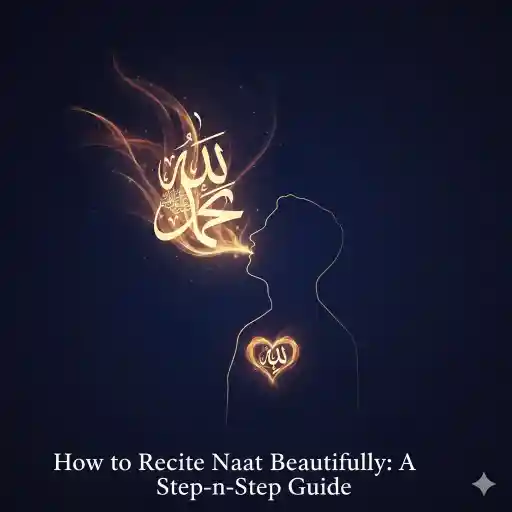
For centuries, Naat Khwani—the recitation of poetic praises in honor of the Prophet Muhammad (PBUH)—has been a profound expression of love, devotion, and spiritual joy for Muslims around the world. This beautiful tradition connects reciters and listeners directly to the Seerah (biography) of the Prophet, fostering a deeper bond through the power of melodious, heartfelt words.
To recite Naat beautifully is to blend technical skill with sincere devotion, ensuring the recitation honors its noble subject. Whether you are beginning your journey or seeking to refine your craft, mastering a few essential principles can transform your recitation. This guide will help you develop both the art and the heart of Naat recitation.
Understanding the Spirit of Naat
Before delving into technique, it’s crucial to grasp the essence of what you are performing. Naat is not merely a musical performance; it is an act of ‘Ibadah (worship) and a public declaration of love. Historically, noble Companions of the Prophet (PBUH), such as Hassan bin Thabit (RA), engaged in this practice, and the Prophet (PBUH) himself would listen with pleasure and bless them. Your primary goal should be to seek the pleasure of Allah and His Messenger (PBUH), not merely to impress an audience.
Respect and reverence are the bedrock of this art. The words must always reflect the highest status of the Prophet (PBUH), using titles and descriptions worthy of him. As you prepare, internalize the meaning of the poetry. Understanding every word you recite allows you to convey its message with authentic emotion and sincerity, moving from simply saying words to truly communicating a message of love.
Building Your Foundational Skills
A beautiful recitation rests on a foundation of clear and correct pronunciation. This is where your journey truly begins.
Master Makharij and Tajweed: Just as in Quranic recitation, giving every Arabic letter its rightful articulation point (Makhraj) is essential. Work on pronouncing each letter from its specific place in the mouth or throat to achieve clarity and purity in your diction. While Naat may not require the full complexity of Quranic Tajweed, applying its basic principles to Arabic verses within a Naat enhances the recitation’s beauty and respectfulness.
Practice with Breath Control: Your breath is the fuel for your voice. Practice deep, diaphragmatic breathing to support longer phrases without strain. Simple exercises, like inhaling deeply for four counts, holding for four, and exhaling steadily for eight, can build control. Good breath management ensures your voice remains steady, powerful, and beautiful from beginning to end.

The Art of Melody and Delivery (Tarannum and Adaegi)
The soul of a Naat often lies in its melody, known as Tarannum. This is where technical skill meets emotional expression.
Start with Simple Scales (Maqamat): You don’t need to be a master musician to begin. Many beautiful Naats are composed in fundamental melodic modes (Raags). Familiarize yourself with the feel of basic scales. As one resource notes, much of Naat is “Light-Classical Music,” where the singer blends scales to create something moving without being rigidly bound to one pure mode. Listening to renowned Naat Khawans is one of the best ways to develop an ear for these patterns.
Find Your Note and Match Pitch: A practical first step is learning to match your voice to a consistent pitch. Traditionally, students use a harmonium to find and hold a note, training their ear and voice to align. Today, you can use free piano software or mobile apps that simulate a reed organ to practice matching pitch, which is crucial for staying in tune.
Cultivate Emotional Expression (Adaegi): Tarannum is empty without Adaegi—the emotional delivery. Let the meaning of the words guide your voice. Does the line speak of the Prophet’s (PBUH) mercy? Let your tone soften. Does it describe his majesty? Let your voice carry strength and reverence. Your emotional connection is what transforms a recitation into an experience for the listener.
Cultivating the Right Etiquette and Mindset
The most technically perfect recitation can fall short if not accompanied by the correct etiquette (Adab).
Prioritize Respect Over Trend: It is vital to ensure that the style of your recitation, including its tune and presentation, always aligns with the dignity and reverence owed to the Prophet (PBUH). Avoid adopting tunes from popular songs or performing in a theatrical manner that might distract from the sacredness of the words. The gathering should focus on spiritual reflection, not entertainment.
Seek Knowledgeable Feedback: Regular practice is key, but practicing correctly is even more important. If possible, learn from a qualified teacher who can provide live feedback on your melody, rhythm, and tone. They can help you correct mistakes in real time and guide your development.
Perform with Humble Confidence: When you recite, do so with the confidence that comes from preparation and sincere intention, but also with the humility of someone standing in spiritual presence. Imagine yourself presenting these praises in a noble gathering, focusing on the meaning rather than yourself.

Your Path to Beautiful Recitation
Reciting Naat beautifully is a fulfilling journey that nurtures both your soul and your skills. Remember to:
Begin with a sincere heart focused on love for the Prophet (PBUH).
Build a strong technical foundation in pronunciation and breath control.
Learn the melody (Tarannum) and deliver with true emotion (Adaegi).
Always uphold the highest etiquette, ensuring every aspect of your recitation is respectful.
The great scholar Imam Ahmad Raza Khan (RA) once emphasized that writing and reciting Naat is a delicate task, requiring one to walk a straight path of respect. By combining diligent practice with profound reverence, you can walk this path beautifully, using your voice to echo the everlasting love of the Ummah for its beloved Prophet (PBUH).
Are you inspired to begin or deepen your journey in the art of Naat? At Nurjan Quran Academy, we offer structured online Naat courses for all ages and levels. Our expert tutors provide one-on-one guidance in voice training, melody (Tarannum), and expressive delivery (Adaegi), helping you recite with both beauty and reverence. Visit our Naat Course page to learn more and register for a free trial session today.
How Nurjan Quran Academy Turns These Lessons into Success
Avoiding these common mistakes begins with choosing the right academy. At Nurjan Quran Academy, we don’t just teach—we build lifelong connections to the Quran.
For students in the USA, UK, Canada, and across Europe: Join a learning environment where technology meets tradition, and convenience never compromises quality.
📞 Take the next step: Book a free trial class today. Experience our teaching method, meet your potential tutor, and see how we tailor lessons for your success—whether in Quranic recitation, Hifz, Tafsir, or the beautiful art of Naat.
Embrace your Quranic journey with confidence. Avoid the pitfalls. Start strong, stay consistent, and let every letter bring you closer to Allah.