

Introduction: A Decision That Shapes a Lifelong Connection
As a parent, few decisions carry as much spiritual weight as choosing who will guide your child in learning the Holy Quran. This person will not only teach them the rules of Tajweed but will also help shape their relationship with the words of Allah. In the digital age, the world of online Quran tutoring offers incredible access to qualified teachers from across the globe. But with this abundance of choice comes a crucial question: How do I find Best Online Quran Tutor for Your Child?
This isn’t just about finding someone who can recite the Quran beautifully. It’s about finding a mentor who can connect with your child, inspire a love for learning, and provide a safe, nurturing, and effective educational experience. This guide will walk you through the five essential steps to finding an online Quran tutor who is not just qualified, but truly perfect for your child’s unique needs.
1. Prioritize Essential Qualifications and Certification (The Foundation)
The first and most non-negotiable criterion is the tutor’s religious and educational qualification. A beautiful voice is not enough; a deep understanding of the rules is paramount.
Look for Ijazah: The gold standard for any Quran & Naat teacher is Ijazah. This is a formal certification, a chain of transmission that links the teacher back to the Prophet Muhammad (PBUH) himself. An Ijazah in Quran Recitation means the tutor has mastered Tajweed and has been authorized to teach it by another certified scholar. For memorization (Hifz), an Ijazah in Memorization is crucial. Always ask a potential academy or tutor if they have Ijazah and in what specific recitation (e.g., Hafs ‘an ‘Asim).
Formal Islamic Education: A tutor with a background from a reputable Islamic university or institute will have a stronger foundation in the sciences of the Quran, including Tafsir (explanation) and the reasons behind the rules of Tajweed. This depth of knowledge allows them to answer your child’s “why” questions, enriching their learning.
Proficiency in the Language of Instruction: If your child is more comfortable in English, the tutor must be proficient enough to explain complex Arabic rules clearly and simply. Miscommunication can lead to a weak foundation.
2. Assess Teaching Experience and Specialization with Children
A scholar may have immense knowledge, but if they cannot convey it to a 7-year-old, the classes will fail. Teaching children is a specialized skill.
- Child-Specific Pedagogy: Ask the academy about the tutor’s experience with children. Do they use interactive methods like Quranic games, digital whiteboards, animated stories of the prophets, and reward systems? A good tutor knows how to break down lessons into manageable, engaging chunks to maintain a child’s often short attention span.
- Patience and Nurturing Demeanor: This is perhaps the most critical soft skill. Learning a new language and set of rules is challenging. The tutor must be patient, encouraging, and positive. They should correct mistakes with gentleness, building the child’s confidence rather than breaking it. A stern or impatient teacher can cause a child to develop a lifelong aversion to Quran learning.
- Ability to Build Rapport: During a trial class, observe: Does the tutor smile? Do they use a warm, friendly tone? Do they try to connect with your child on a personal level, perhaps by asking about their day or their interests? A strong student-teacher bond is the fuel for long-term motivation.
3. Ensure a Safe, Professional, and Transparent Environment
Your child’s safety online is paramount. The platform and the tutor’s conduct must be professional and trustworthy.
- Parental Supervision and Transparency: Reputable academies encourage and facilitate parental oversight. You should always have the ability to sit in on classes, or at the very least, have access to recorded sessions. There should be no secrets. The ability to monitor the class ensures the child’s safety and allows you to track their progress firsthand.
- Professional Setup: The tutor should conduct classes in a professional, distraction-free environment. They should be dressed modestly and appropriately. The use of a dedicated, secure learning platform (or even well-known software like Zoom) is preferable to informal, unmonitored chat apps.
- Clear Communication with Parents: A good tutor or academy provides regular progress reports. They should communicate with you about your child’s strengths, areas for improvement, attendance, and any concerns they might have. You are a partner in your child’s education.
4. Evaluate the Learning Structure and Technological Tools
The structure of the lessons and the technology used are the backbone of an effective online learning experience.
Structured Curriculum: Ask about the curriculum. Is it standardized? Do they follow a proven program like Noorani Qaida for beginners? A structured path ensures that your child’s learning is sequential and comprehensive, building from letters to words to fluent recitation with Tajweed.
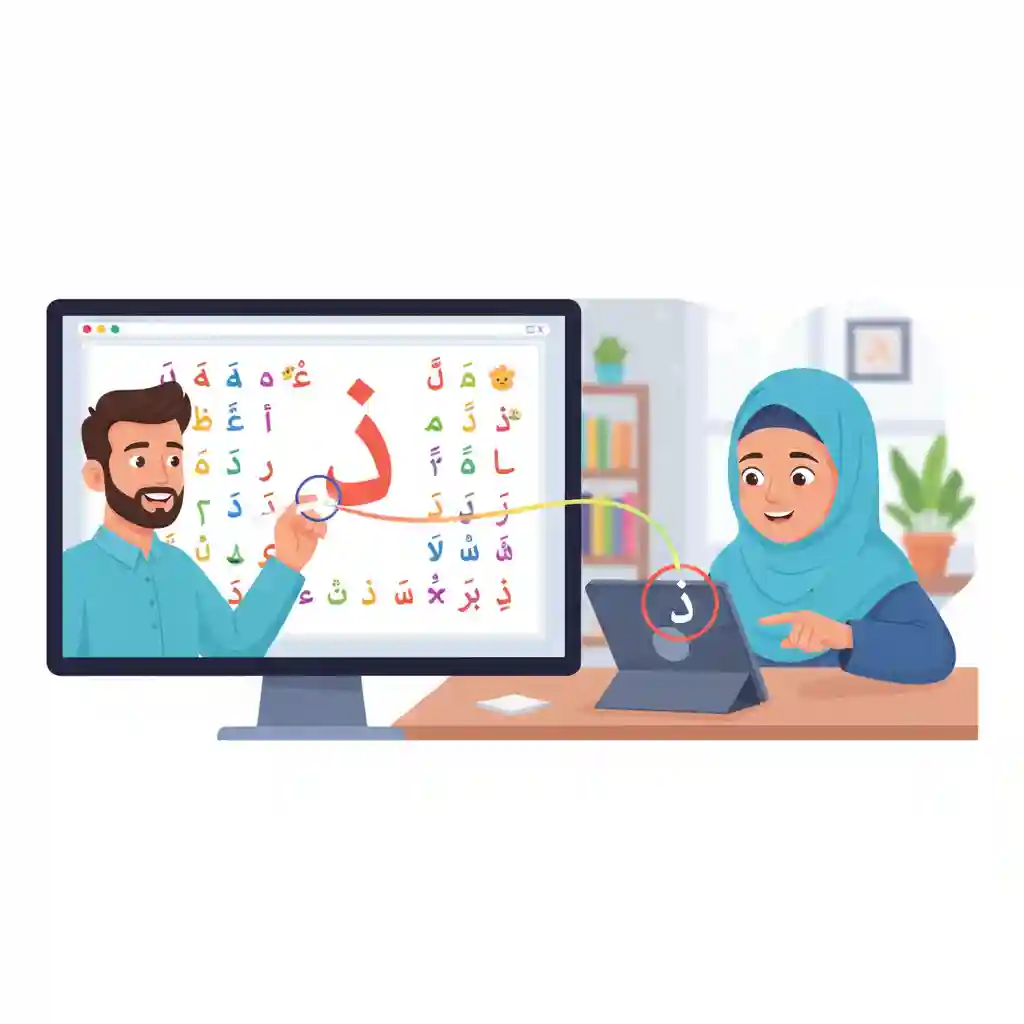
Interactive Technology: The class should be more than just a video call. The best tutors use digital tools like interactive whiteboards to write rules, highlight Arabic text, and share screens with engaging learning materials. This multi-sensory approach makes the lesson more dynamic and effective than a passive listening session.
Trial Class is a Must: Never skip the trial class. This is your most important evaluation tool. Use it to assess everything we’ve discussed: the tutor’s qualifications, teaching style, rapport with your child, and use of technology. Observe your child’s reaction. Were they engaged and happy? Did they understand the teacher’s instructions? Their comfort and interest are the ultimate test.
5. Define Your Practical Needs and Gut Feeling
Finally, align the practicalities with your own intuition as a parent.
Scheduling and Flexibility: Ensure the tutor’s availability matches your family’s schedule. Are they flexible if you need to reschedule occasionally? Consistency is key to progress, so a reliable schedule is important.
Cost and Value: While cost is a factor, view it as an investment. The cheapest option may not provide the qualified, specialized teaching your child deserves. Weigh the cost against the tutor’s qualifications, experience, and the structure of the program.
Trust Your Instincts: After the trial class and your research, listen to your gut feeling. Do you feel confident and comfortable leaving your child’s Quranic education in this person’s hands? Do you trust their character and their methodology? A parent’s intuition is a powerful guide.
Conclusion: Your Partner in Spiritual Nurturing
Choosing an online Quran tutor is a significant decision, but it doesn’t have to be an overwhelming one. By focusing on these five pillars—Qualifications, Teaching Style, Safety & Transparency, Lesson Structure, and Practical Fit—you can move forward with confidence.
Remember, the ideal tutor is more than an instructor; they are a mentor who will help plant the seeds of love for the Quran in your child’s heart. They will be your partner in nurturing your child’s faith and identity.
Ready to Find Your Child’s Perfect Quran Tutor?
At Nurjan Quran Academy, we understand the weight of this decision. That’s why we meticulously vet all our tutors, ensuring they are not only Ijazah-certified but also specialists in child education. We provide a safe, transparent, and interactive learning platform with structured curricula and regular progress reports for parents.
Take the first step with no obligation. Book a Free Trial Class Today! See for yourself how the right teacher can transform your child’s Quranic learning journey into a joyful and enriching experience.
FAQ's
Frequently Asked Questions
Children can start as early as 4-5 years old with basic Arabic letter recognition in a fun, game-based format. Serious Tajweed and reading typically begin around 6-7 years old when their cognitive and motor skills are more developed.
For young children (under 10), 30-minute sessions are ideal to maintain focus and engagement. For older children and teens, 45-minute to 1-hour sessions can be effective.
Most structured programs assign short, daily practice exercises (5-15 minutes) to reinforce what was learned in class. Consistency in practice is key to progress.
A skilled tutor will know how to engage shy children with encouragement and interactive activities. For easily distracted children, they will use a variety of digital tools and break up the lesson into shorter segments to keep them engaged. Communicating your child's personality to the tutor beforehand is very helpful.